Black and Yellow Argiope(Argiope aurantia)
Not considered dangerous to humans, Argiope spiders are large and commonly encountered and occur statewide.
by Jeffrey S. Pippen | Back to Jeff's Spiders Page | Jeff's Nature Pages
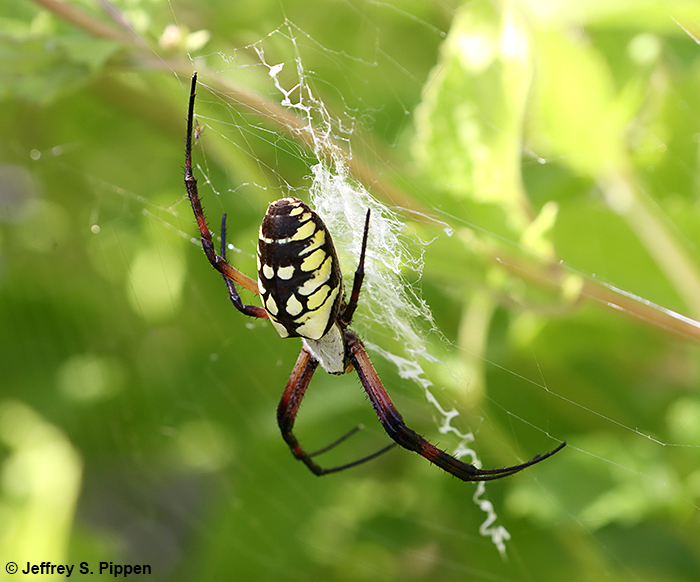
Black and Yellow Argiope, Golden Garden Spider, Writing Spider (Argiope aurantia)Alamance Co., NC25 Sep 2022
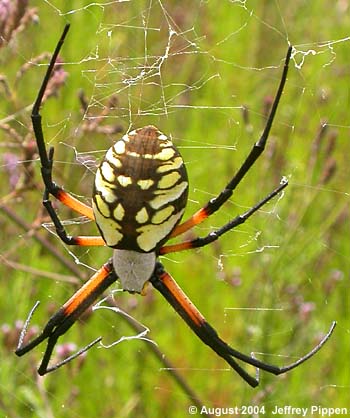
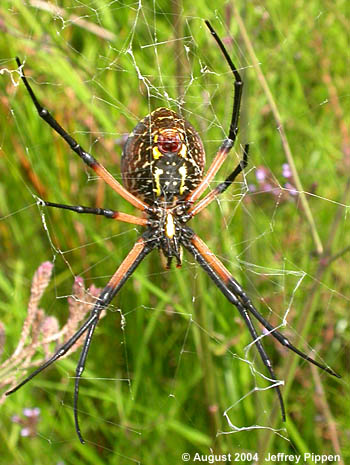
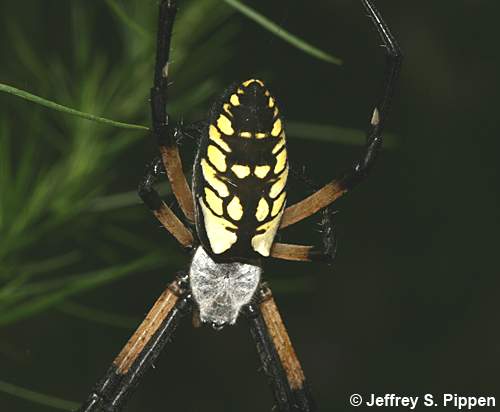
Dorsal viewBlack and Yellow Argiope, Golden Garden Spider, Writing Spider (Argiope aurantia)York Co., VA21 Aug 2013
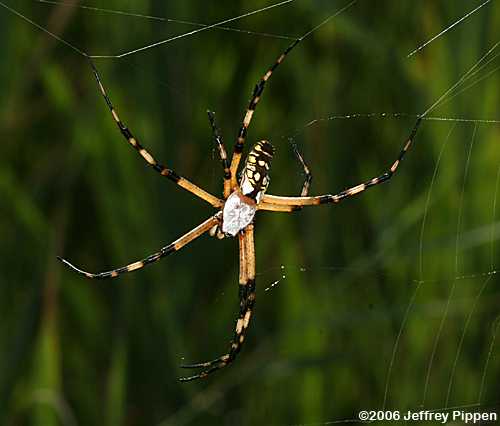
Black and Yellow Argiope, Golden Garden Spider, Writing Spider (Argiope aurantia)Brunswick Co., NC13 Aug 2006
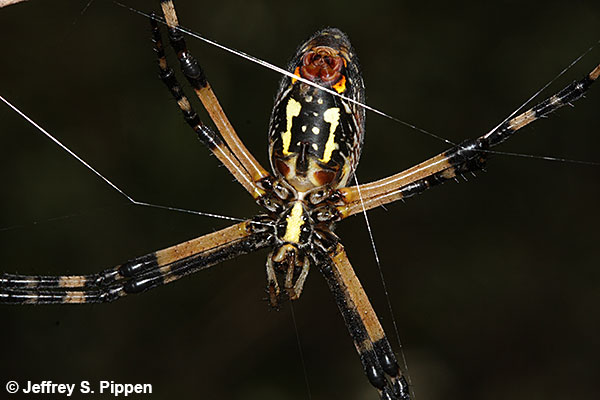
Black and Yellow Argiope, Golden Garden Spider, Writing Spider (Argiope aurantia)Island Creek, Jones Co., NC25 Aug 2018
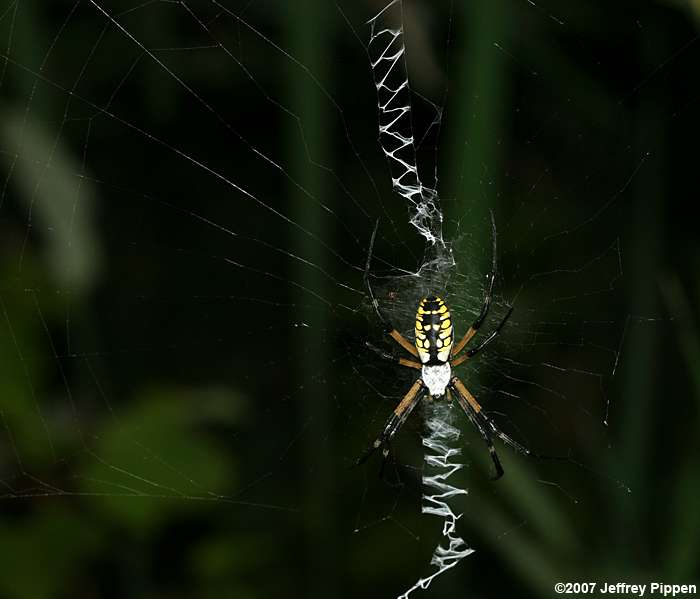
Black and Yellow Argiope, Golden Garden Spider, Writing Spider (Argiope aurantia)Craven Co., NC26 Aug 2007Called "Writing Spiders" because they "write" in the middle of their webs.
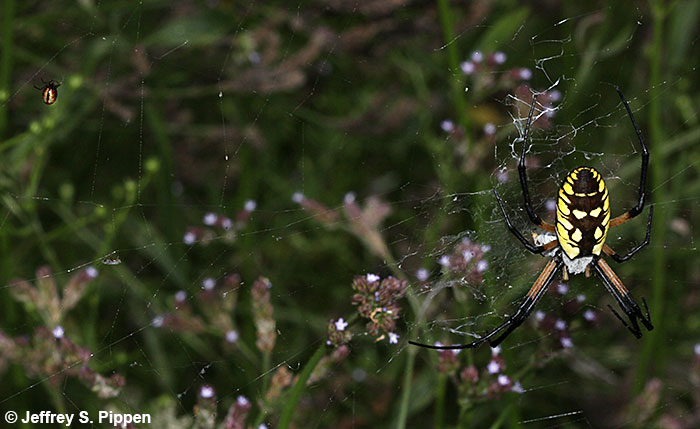
Probably Neospintharus trigonum, formerly known as Argyrodes trigonumDuke Forest Durham Division, Orange Co., NC21 Sep 2019These spiders live a kleptoparasitic lifestyle, in this case stealing bits of food from the webs of larger spiders. The individual above can be seen in the upper left corner of this photo in the web of a Garden Spider (Argiope aurantia). While I didn't get a photo, I also noticed this little spider spinning together with his own silk some of the larger strands of the Garden Spider's web.
Created on ... Oct 18, 2006 | jeffpippen9@gmail.com