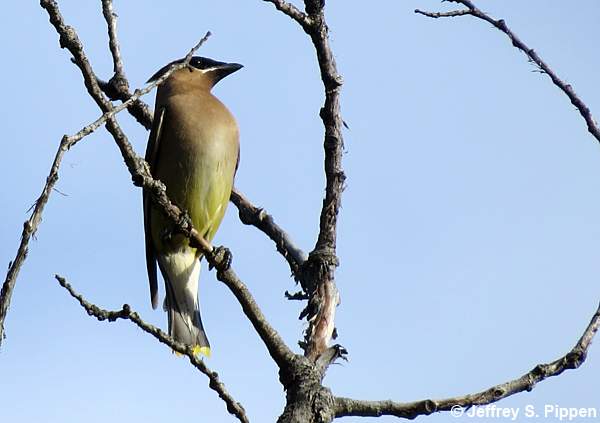
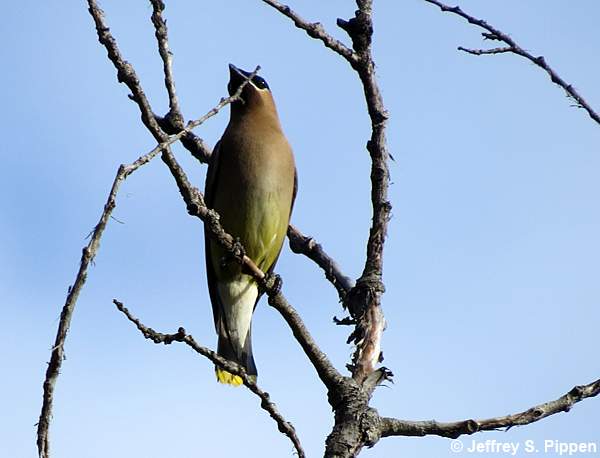
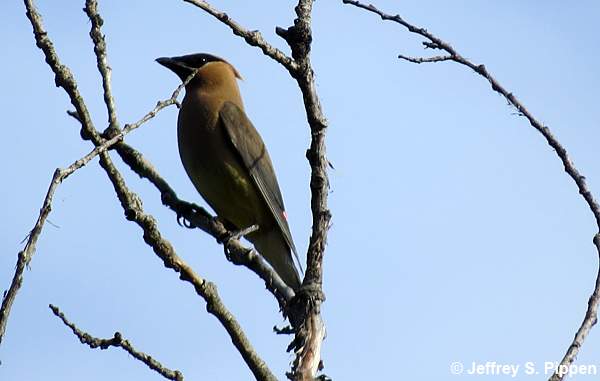
Breeds in NC mountains and sporadically and rarely downstate, waxwings can be locally abundant in winter around fruiting shrubs & trees.
13 photographs
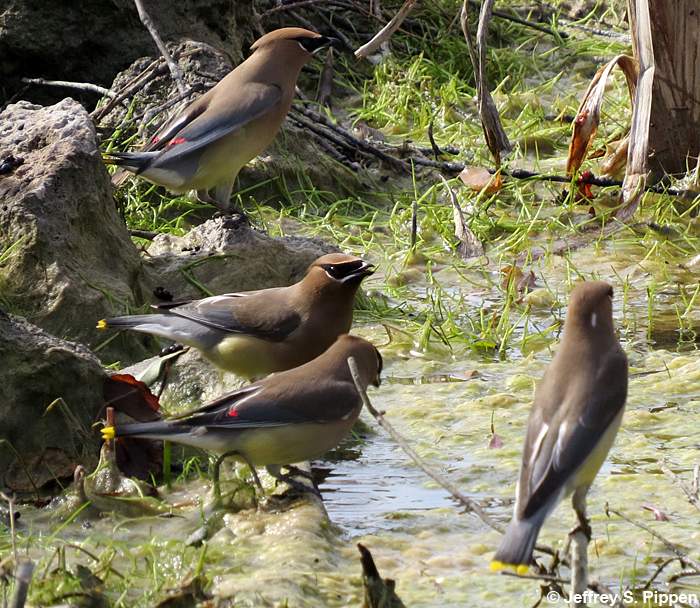
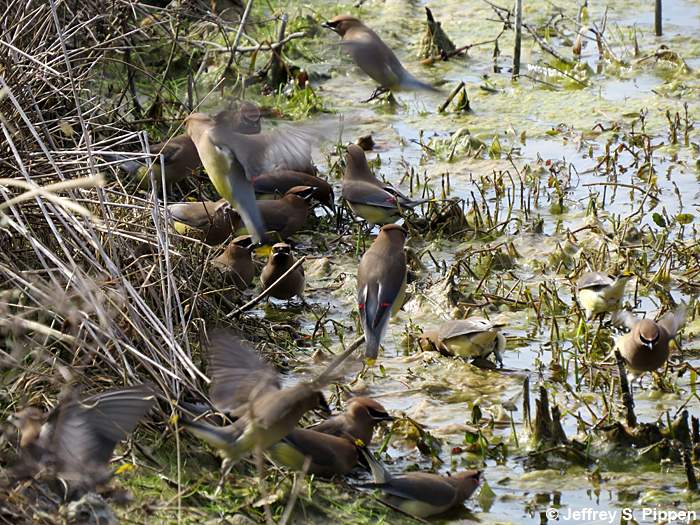
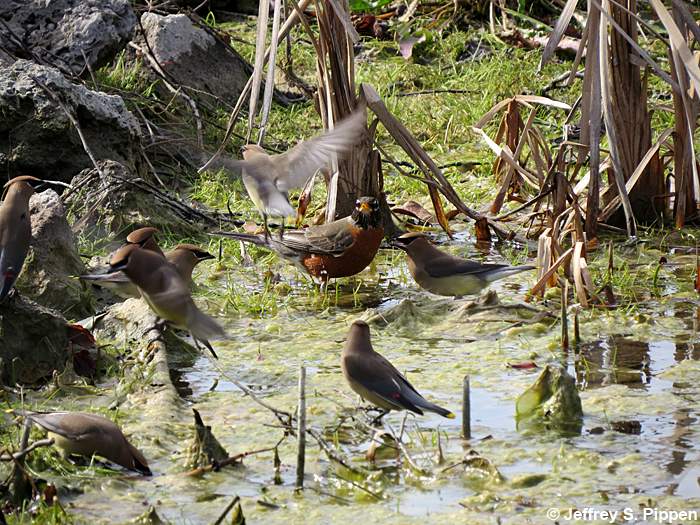
Cedar Waxwing (Bombycilla cedrorum)Fort Fisher SRA, New Hanover Co., NC26 Jan 2014Large flocks of waxwings invaded parts of the North Carolina coast during the winter of 2013-2014.Cedar Waxwing (Bombycilla cedrorum)Fort Fisher SRA, New Hanover Co., NC26 Jan 2014Cedar Waxwing (Bombycilla cedrorum)Fort Fisher SRA, New Hanover Co., NC26 Jan 2014With apologies to Sesame Street, One of these birds...is not like the others...
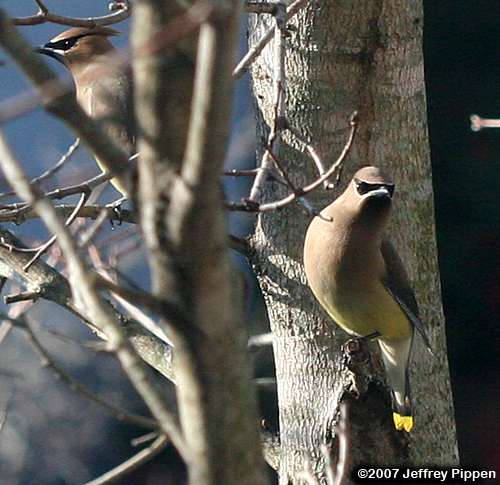
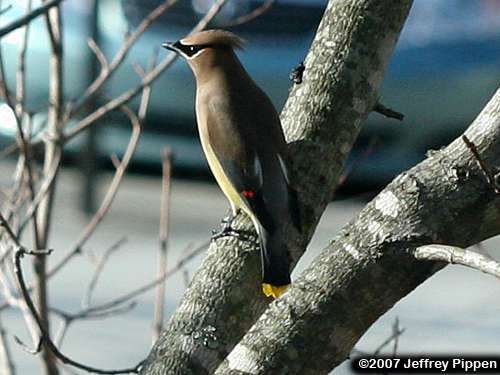
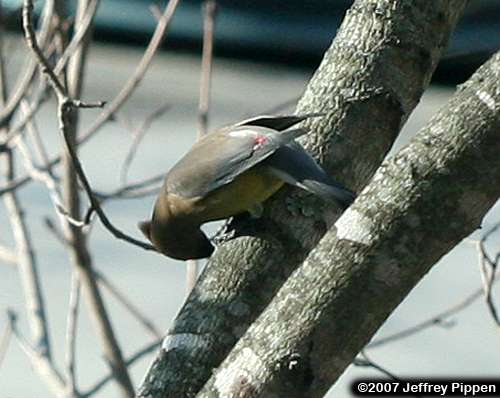
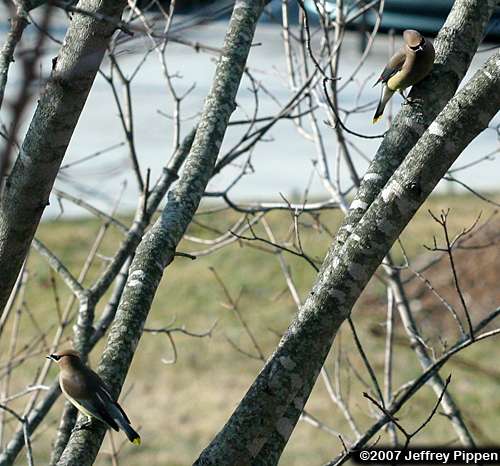
Cedar Waxwing (Bombycilla cedrorum)Durham Co., NC20 Feb 2007Most waxwing tail tips are yellow, but a small percentage are orange.Cedar Waxwing (Bombycilla cedrorum)Durham Co., NC20 Feb 2007Waxwings are named for the red waxy substance produced at the tips of the secondary flight feathers.Cedar Waxwing (Bombycilla cedrorum)Durham Co., NC20 Feb 2007Drinking from sapsucker wells in this sugar maple on Duke University's campus.Cedar Waxwing (Bombycilla cedrorum)Durham Co., NC20 Feb 2007All of these photos were taken through my office window while sitting at my desk at Duke with only a 100mm macro lens.
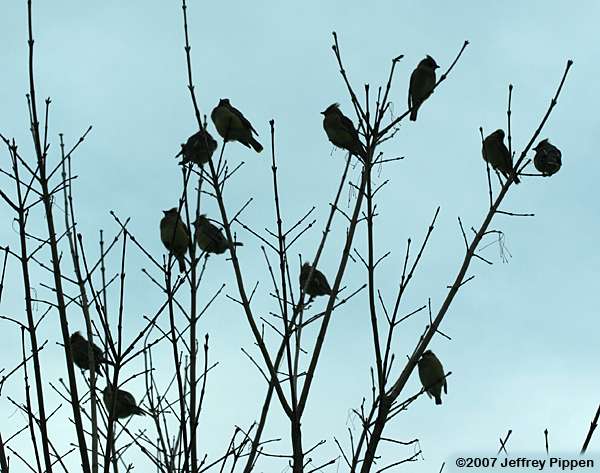
Cedar Waxwing (Bombycilla cedrorum)Durham Co., NC20 Feb 2007Flocking in the treetop just after sunrise, these waxwings are preparing to descend on the nearby sapsucker wells and fruiting hollies.
Cedar Waxwing (Bombycilla cedrorum)Missoula Co., MT12 Sep 2013
Cedar Waxwing (Bombycilla cedrorum)New Hanover Co., NC3 Jan 2016
Created on ... February 17, 2006 | jeffpippen9@gmail.com