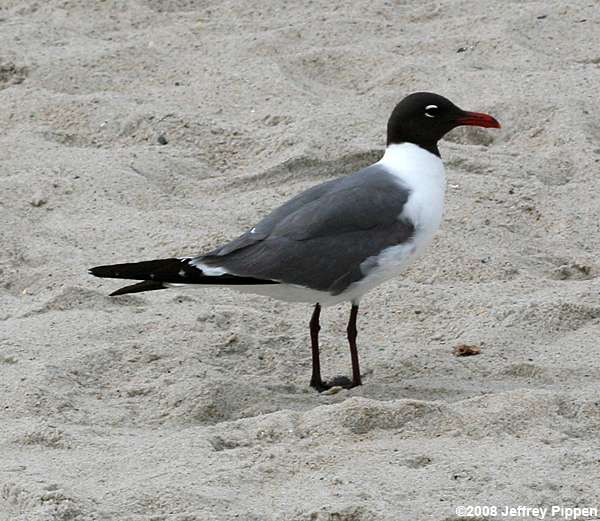
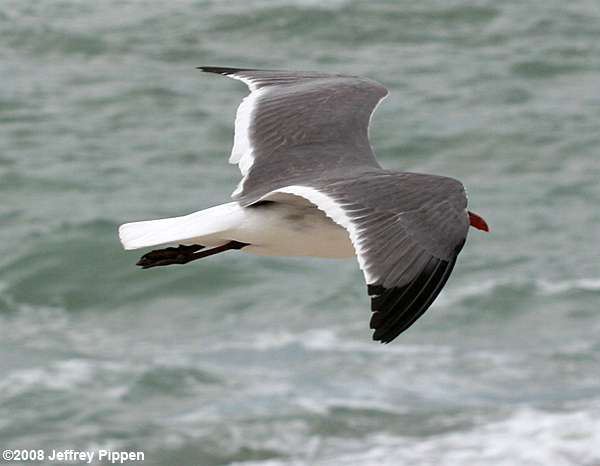
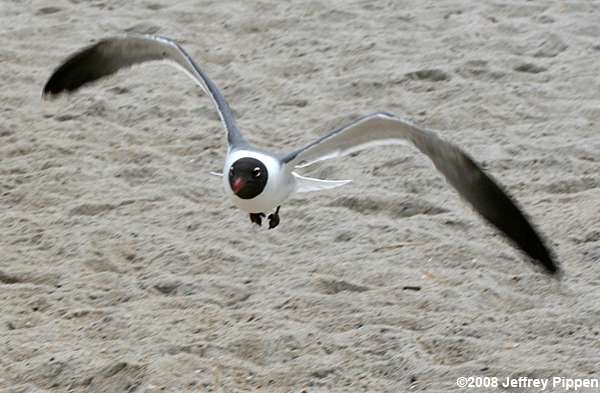
The most common gull in the summer at the North Carolina beaches, this gull's voice can break out in a maniacal laughter sound. In the winter, nearly all Laughing Gulls head south and leave NC.
Laughing Gull (Larus atricilla)Ft. Fisher in New Hanover Co., NC18 May 2008In summer breeding plumage, Lauging Gull heads are all black. White crescents are found above & below their eyes, and bills are deep blood red.Laughing Gull (Larus atricilla)Ft. Fisher in New Hanover Co., NC18 May 2008Laughing Gull (Larus atricilla)Ft. Fisher in New Hanover Co., NC18 May 2008
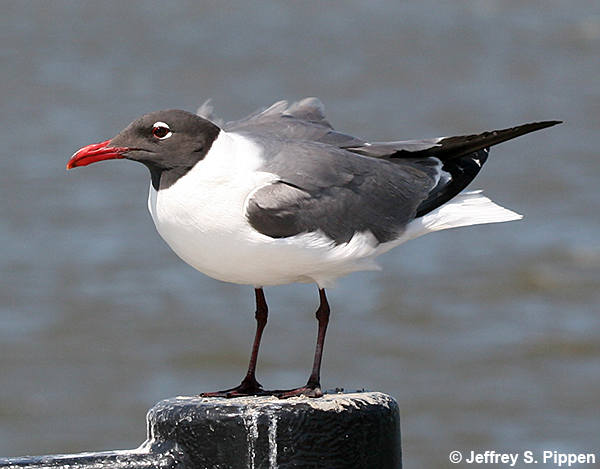
Laughing Gull (Larus atricilla)Miami-Dade Co., FL6 Oct 2006In winter, the heads of Laughing Gulls are not black.Laughing Gull (Larus atricilla)Collier Co., FL8 Oct 2006Immature (1st winter) Laughing Gull.Collier Co., FL8 Oct 2006Note the wings feathers have not yet molted to the adult's smooth gray appearance.Laughing Gull (Larus atricilla)Collier Co., FL31 Dec 2007
Laughing Gulls (Larus atricilla)Figure 8 Island, New Hanover Co., NC24 Jan 2014
Laughing Gull (Larus atricilla)Cape Hatteras, Dare Co., NC27 May 2006Breeding plumage adults (right) have full black heads, while immature and non-breeding Laughing Gulls lack all black heads.
Laughing Gull (Larus atricilla)Ft. Fisher, New Hanover Co., NC16 May 2007
Created on ... June 29, 2006 | jeffpippen9@gmail.com